Logo

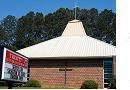
TRINITY LUTHERAN CHURCH - SCOTTSBORO, AL

Sep 11, 2011    13th Sunday after Pentecost    Matthew 18: 20-35


Grace and Peace to you from God our Father and from our Lord and Savior Jesus Christ. Amen

Our text for today’s meditation is the Gospel reading.

hen Peter came up and said to him, "Lord, how often will my brother sin against me, and I forgive him? As many as seven times?" 22 Jesus said to him, "I do not say to you seven times, but seventy times seven. 23 "Therefore the kingdom of heaven may be compared to a king who wished to settle accounts with his servants. 24 When he began to settle, one was brought to him who owed him ten thousand talents. 25 And since he could not pay, his master ordered him to be sold, with his wife and children and all that he had, and payment to be made. 26 So the servant fell on his knees, imploring him, 'Have patience with me, and I will pay you everything.' 27 And out of pity for him, the master of that servant released him and forgave him the debt. 28 But when that same servant went out, he found one of his fellow servants who owed him a hundred denarii, and seizing him, he began to choke him, saying, 'Pay what you owe.' 29 So his fellow servant fell down and pleaded with him, 'Have patience with me, and I will pay you.' 30 He refused and went and put him in prison until he should pay the debt. 31 When his fellow servants saw what had taken place, they were greatly distressed, and they went and reported to their master all that had taken place. 32 Then his master summoned him and said to him, 'You wicked servant! I forgave you all that debt because you pleaded with me. 33 And should not you have had mercy on your fellow servant, as I had mercy on you?' 34 And in anger his master delivered him to the jailers, until he should pay all his debt. 35 So also my heavenly Father will do to every one of you, if you do not forgive your brother from your heart." (ESV)

It was bright clear Tuesday morning that seemed no different from the one the day before, but that day ten years ago today would be like no other. At 8:46 and for the next 102 minutes from the first strike until the second tower fell we held our breath and watched the death and destruction in horror. We lost over 2,600 of our countrymen that day. We had never seen such destruction from terrorists on our home soil. Where were you when this happened? Many have said "We must not forget!" Our bodies even tell us "We must not forget!" I’m told that our bodies handle tragic events such as this differently than routine events. Our brain stores these events in a different area of the brain which makes them so vivid this many years later. Do you remember what emotions you felt that day? I know I felt sadness, fear, and anger. I’m sure there was plenty of hate at that point for the unknown assailants as well as other emotions. So, what is it that we must not forget?

Let’s turn to Peter and the encounter he had with Jesus to see if the answer is there. Peter had a very practical question, how many times do I have to forgive someone, seven times? Peter is again thinking earthly and very secular. The culture of the time had a rule of thumb of forgiving three times so Peter was being very generous by suggesting seven times. Our Lord in turn multiplies that and says seventy seven times which is to be interpreted as infinitely. Jesus wants Peter to show mercy and forgive his brother an infinite number of times. Jesus then tells the parable of the unforgiving servant to show Peter where that mercy comes from.

Jesus compares the Kingdom of heaven to a king that wishes to settle his accounts. When a man comes before the king that owes him an outrageous amount, an amount that is larger than most countries annual budget the king forgives the debt after the servant pleads with the king and promises to repay. The king shows the servant mercy. That servant being so overjoyed by the king’s mercy in turn shows the same amount of mercy to his fellow servant that owes him the equivalent of only three months wages. Wait, that isn’t how the parable goes, is it? The servant turns to his fellow servant and throws him in debtor’s jail even though he pleaded and promised to repay just like the other servant did to the king. By placing him in jail the fellow servant would never be able to work in order to repay the debt. The servant showed no mercy even though the amount of mercy shown him was immense.

In this parable the king is God. You are the servant coming before the king. You have a debt to pay, a debt incurred by your sin. This debt is so large that you could never pay it just like the servant, which means the debt is paid by the shedding of blood, your blood, your death. You come before Him and plead for your life, you plead for mercy. He shows you mercy in the face of death. He forgives your debt. He not only forgives your debt but he pays the debt sending His own Son to give His life, His blood on the cross at Calvary for you. Jesus pays your
debt of death for you and remembers the sin and the debt no more. Jesus buried your debt in the tomb and left it there when He rose from the dead. God shows you mercy in the form of Jesus’ death and resurrection. Turn to Psalm 103 verse10 through 12, "He does not deal with us according to our sins, nor repay us according to our iniquities. 11 For as high as the heavens are above the earth, so great is his steadfast love toward those who fear him; 12 as far as the east is from the west, so far does he remove our transgressions from us." (ESV) This is a beautiful Psalm that attempts to quantify God’s Mercy in Human terms. As far as the Heavens are from the Earth, wow, that is a long way, we can’t even get there with our modern day rockets and space vehicles. We do have a concept of how far it is courtesy of the Hubble telescope and it is a huge space. As far as the east is from the west, a little easier to comprehend but then again not, the east never touches the west. Your sins are removed and forgotten so, do not forget, do not forget what? Do not forget God’s mercy! You have been shown God’s immense mercy, what will you remember when you encounter someone that has sinned against you? Will you remember the sin or the mercy? Do not forget!

You might be thinking that this is fine for your everyday run of the mill sins but what about evil, what about the terrorists on 9-11, they were evil and their act was evil. Surely, mercy and forgiveness should be withheld from someone that does evil?

Turn to an example in the Old Testament lesson, Genesis 50 verse 17. "Please forgive the transgression of your brothers and their sin, because they did evil to you." Notice the actions of his brothers were evil, not just what we might call ordinary sin, and their actions were evil by their own admission. What does Joseph remember; does he remember the sin or God’s mercy? Verse 20 "you meant evil against me, but God meant it for good." And then in verse 21 "So do not fear; I will provide for you and your little ones." He not only forgave them but cared for them and their families. He did not forget God’s Mercy! I know it is hard to think that the attacks on 9-11 were meant for good. Remember God did not cause the sin and evil on 9-11, but He may have used it for His good.

So what are we supposed to do? Do not forget, forget what? God’s mercy! What does remembering God’s mercy look like? Look at the Lord’s Prayer in your service folder. Forgive us our trespasses as we forgive those who trespass against us. We are asking not to be like the unforgiving servant, we are asking God to help us to forgive and we are asking God to forgive us in the same way. That is what remembering God’s mercy looks like, forgiving those who sin against you. What happens if we don’t remember God’s mercy and instead remember the sin? Turn to the Epistle reading for today. Romans 14 verses 10 through 12. "Why do you pass judgment on your brother? Or you, why do you despise your brother? For we will all stand before the judgment seat of God; 11 for it is written, "As I live, says the Lord, every knee shall bow to me, and every tongue shall confess to God." 12 So then each of us will give an account of himself to God." Notice you and I will give an account of ourselves before God. In the parable the king throws the unforgiving servant in the debtor’s jail because he did not show mercy to his brother, his fellow servant. The end of the parable really brings it home, "So also my heavenly Father will do to every one of you, if you do not forgive your brother from your heart." Without the mercy of God you will dry up and die, forever. There are two seas in the area near Jerusalem, the Sea of Galilee and the Dead Sea. The Sea of Galilee has a river that feeds the sea and a river that flows out from the Sea of Galilee. The Sea of Galilee is a healthy Sea full of life where the minerals that flow in are used and then carried on. The Dead Sea has a river that feeds it but it does not have a river that flows out from it. The only way the water leaves the Dead Sea is from evaporation. The minerals that flow into the Dead Sea have nowhere to go. When the water evaporates it leaves the minerals behind. The Dead Sea has a toxic level of minerals and exemplifies its name, it is dead, and there is no life in the Dead Sea. As with us, we are to pass on God’s mercy as the minerals flow from the Sea of Galilee otherwise we will have no life in us.

We do not know God’s ways. We do not know what Good God used the attacks of 9-11 for and we may never know. We know God is with us and He is merciful and He wants us to be merciful as well. Do not hold on to the anger, the bitterness, and the hate. Those minerals will lead to you drying up and dying eternally. Pass on God’s mercy; proclaim Jesus’ death and resurrection through your words and your actions. Do not forget; do not forget God’s infinite mercy.

Amen

Home